PrintJoy guides · trackers
Printable habit trackers that survive the second week
Most trackers fail for a boring reason: they ask for more than the person has decided to do. This guide covers the three-habit rule, the grid that makes progress visible, where to hang the page, and a free tracker maker that prints your own row labels.
6 min read
Key takeaways
- Track three habits, not ten. A page with ten rows is a wish list.
- Put the tracker where the habit happens, not where the printer is.
- Mark a missed day with a dash, not a blank; a blank is ambiguous and a dash is information.
- Review weekly, not daily. The page is a record, not a judge.
Why trackers get abandoned
A tracker is a promise made in a good mood. The person fills in ten rows on day one, misses one on day three, and by day five the page is a record of failure. The problem is not discipline; it is that the page asked for ten decisions every day instead of one.
The second failure is placement. A tracker kept in a drawer is filled in when someone remembers, which is exactly when they do not need it. The tracker has to live where the habit happens: on the fridge for water, on the desk for practice, by the door for walking.
The third failure is the blank. A missed square with nothing in it could mean "did not do it" or "forgot to mark it". Once the reader cannot tell the difference, the record stops being trustworthy and the page stops being used.
The three-habit rule
Three rows is the most a single page can hold before it becomes a second job. One row is a keystone habit: the thing that makes the other things easier. One row is a maintenance habit: something already mostly working that needs a nudge. One row is a pleasure: something the person actually wants to do. A page with those three is a page someone will keep.
If the goal needs more than three habits, use two pages and hang them in different rooms. A page for the morning and a page for the evening is easier to keep than one page with eight rows, because each page is consulted at the moment it matters.
For a child, one row is often enough. A chore chart with one row and a month of squares teaches the same lesson as a chart with ten rows, and it is far more likely to be finished. Add a row only when the first one is automatic.
- One keystone habit: the one that makes the rest easier.
- One maintenance habit: already working, needs consistency.
- One pleasure: something the person wants to do.
Build the page in two minutes
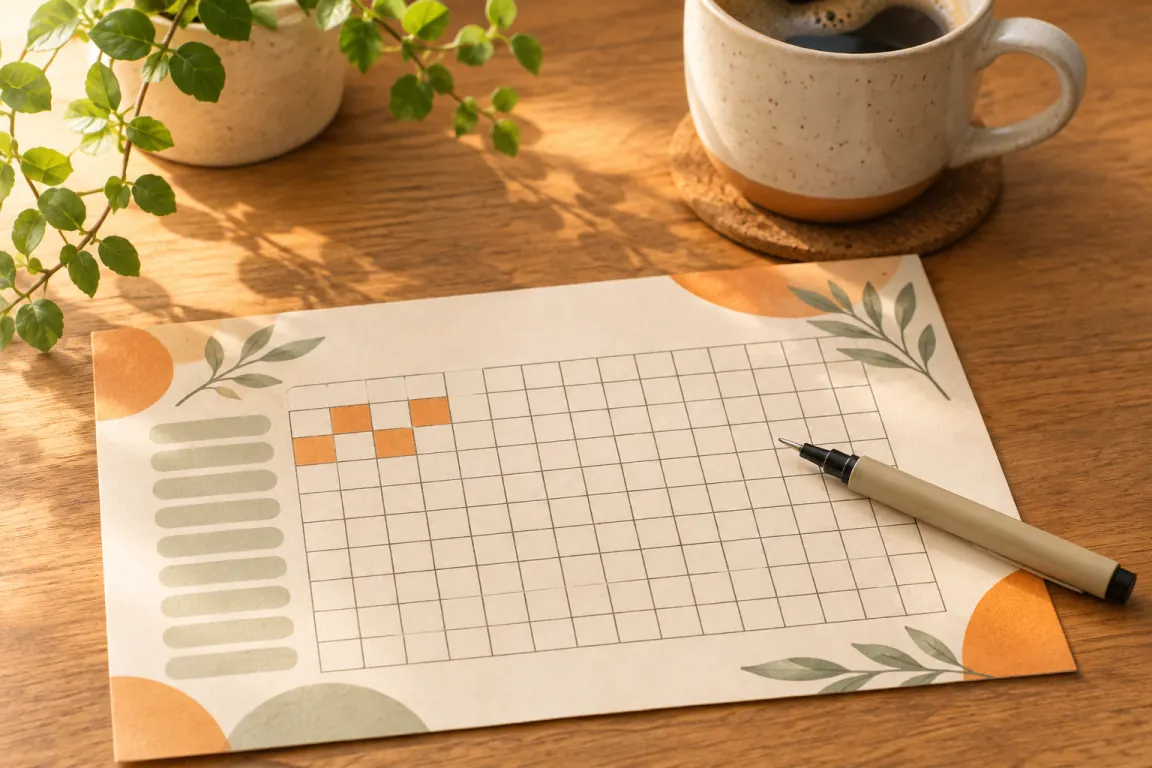
Type the tracker title, then the footer line. The footer is the small print at the bottom: a month, a start date, or a reward. Then add the row labels, one per line. The labels repeat down the left column, and the grid fills the rest of the page.
Keep each label under four words. A label that wraps to two lines makes the row taller and pushes the grid off the page. "Water" is better than "Drink eight glasses of water"; the rule lives in the person’s head, the label only needs to identify the row.
Choose Letter or A4 and download the PDF. Print one copy on plain paper and mark a week with the pen you will actually use. If the squares are too small for the pen, regenerate with fewer rows; the grid gets larger when there are fewer labels.
Try it here
Free tracker maker
Set the title, add one row per habit, and download a month grid with your own labels.

300 dpi output · US Letter 8.5 x 11 in. Layout and downloads stay on this device. PDF includes every page; PNG includes the selected page. Print at 100%, with printer scaling off.
How to mark the page so it stays useful
Use one pen and one mark per day. A dot for done, a dash for missed, a circle for a day that does not count (travel, illness, a holiday). Three marks are enough; a page with stickers and colours takes longer to fill than the habit takes to do.
Mark the day at the same time as the habit. If the habit is walking after breakfast, the mark goes on the page before the shoes come off. A tracker filled in at bedtime is a memory test, not a record.
Never erase a mark. A corrected page is less useful than an honest one. If a mark is wrong, cross it out and add the right one; the page is a log, not a presentation.
At the end of the month, count the marks, not the streaks. A month with twenty dots and ten dashes is a month with twenty wins. Counting streaks turns one missed day into a lost month, which is the fastest way to lose the tracker.
Placement and the weekly review
Hang the tracker at eye level where the habit happens. A water tracker on the fridge, a reading tracker inside the book, a walking tracker by the front door. If the page cannot be seen at the moment of the habit, it is in the wrong room.
Do a weekly review on the same day each week, for two minutes. Look at the dashes and ask one question: what made those days different? The answer is usually practical — a late meeting, a missing ingredient, a lost pen — and the fix is practical too.
Keep the finished pages in a folder. After three months, the folder is a record of what actually happened, which is more useful than any app’s streak counter because it shows the shape of the weeks, not just the total.
- Eye level, in the room where the habit happens.
- Two-minute weekly review; look at the dashes, not the dots.
- Keep finished pages; the pattern across months is the real data.
Using the same page as a chore chart
A chore chart is a tracker with names instead of habits. Use the row labels for the chores and write the child’s name at the top, or use one page per child with the same chores. One page per child is better: it gives each child their own record and removes the comparison that turns a chart into a competition.
Keep the chore list short and specific. "Tidy room" is a judgement; "books on the shelf, clothes in the basket" is a task a child can finish. The row label can be short as long as the standard is clear from the conversation that set it up.
Pay attention to what the chart teaches. A chart that only marks completion teaches completion. A chart with a weekly review teaches the child to look at their own week, which is the habit that outlasts the chart.
Questions about this guide
How many habits should a printable tracker have?
Three. One keystone habit, one maintenance habit and one pleasure. More rows make the page a second job and it gets abandoned.
What is the best size for a habit tracker?
Letter or A4, matching the paper in your printer. Fewer rows make each square larger; if the squares are too small for your pen, remove a row.
How do I mark a missed day?
Use a dash, not a blank. A blank is ambiguous; a dash records that the day was missed, which is information you can review.
Can I use the tracker maker for a chore chart?
Yes. Use the row labels for chores and print one page per child, so each child has their own record.
Is the tracker maker free?
Yes. The layout and the PDF download are free without an account.
Related guides
Printable Journal Ephemera and Word Strips
How to print journal ephemera that looks collected rather than photocopied: strip sizes, paper weight, cutting, storage, and a free word-strip maker.
6 min readFree printable makerHow to Print Printables at Home, Correctly
The print settings that decide whether a printable looks right: scale, paper size, margins, quality, card stock and a calibration sheet you can make free.
6 min read